

Preventive Dentistry

Dental Exams and Check-Ups
Dental exams and checkups are essential in preventive dentistry. Many dental issues are preventable if detected at early stages. Thus, you must visit your dental expert regularly for checkups to assess your oral health. You can treat the dental problems while the condition is not severe. Based on your dental history, recent medication, your dental expert might require you to have frequent teeth examinations and particular treatment. Generally, patients with preexisting health issues like autoimmune disorders and diabetes will require more examination.
At O’Reilly Dental, we have modern tools to offer exceptional dental services based on the needs of patients. We understand you might be in fear, especially when it’s your first-time dental treatment appointment, and thus we discuss your condition confidentially until you are ready. You don’t want to wait until it’s too late to treat your dental problem, so visit our offices today.
What a Dental Examination / Checkup Is
A dental checkup/exam involves the regular cleaning of your teeth during a dental visit. At the dental check-up, the dental expert will screen for tooth decay, gum disease, oral cancer and ask you of any underlying medical problem. The dental expert will also likely discuss certain lifestyles which affect your dental health. The dental expert also conducts a dental x-ray to evaluate the areas where the dentists cannot see with their naked eyes.
The dentist needs to assess your bone loss, tooth decay, periodontal disease, among other dental health issues. Remember, you might have these issues at present but fail to experience or see any signs or symptoms like discoloration or pain. Remember to work with a well-trained dental expert. Working with untrained dentistry might place your oral health at risk.
Teeth Cleaning in Schaumburg, IL
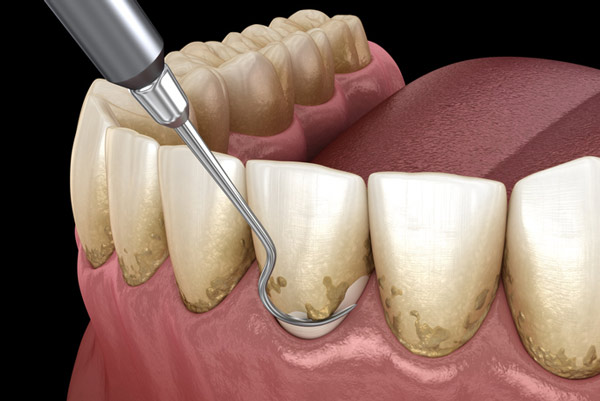
Regular teeth cleanings at our O’Reilly Dental office will put you on the path to enjoying a healthy smile for years to come. At O’Reilly Dental, we’re excited to maximize your health by providing six-month cleanings where we’ll remove hardened plaque from your teeth to keep them clean and healthy. This is essential for your long-term oral health as well as your overall well-being. We’re excited to make your experience as enjoyable as possible, so schedule an appointment today!
4 Benefits of Dental Crowns
- Strengthen Teeth: Dental crowns provide added support to weakened or damaged teeth, preventing further deterioration.
- Natural Look: Achieve a more natural-looking smile by covering discolored, misshapen, or damaged teeth.
- Long-Term Solution: Durable and long-lasting, dental crowns offer protection and stability to your teeth for years to come.
- Flexible Options: Dental crowns offer tailored treatments for both cosmetic and functional issues to meet your dental needs effectively.
Digital X‑rays: Advanced Dental Imaging at O’Reilly Dental
At O’Reilly Dental, we use state‑of‑the‑art digital X‑ray technology to deliver precise, safe, and efficient dental care for every patient. Unlike traditional film X‑rays, our digital system captures high‑resolution images instantly—no waiting for film development, no chemical processing, and far less radiation exposure.
What Are Digital X‑rays?
Digital radiography replaces traditional X‑ray film with a small, sensitive digital sensor. When exposed to low‑dose X‑rays, the sensor converts the signal into a digital image that appears on a chairside computer monitor in seconds. This technology has become the global standard in modern dentistry for its speed, clarity, and patient safety.
3D CBCT imaging
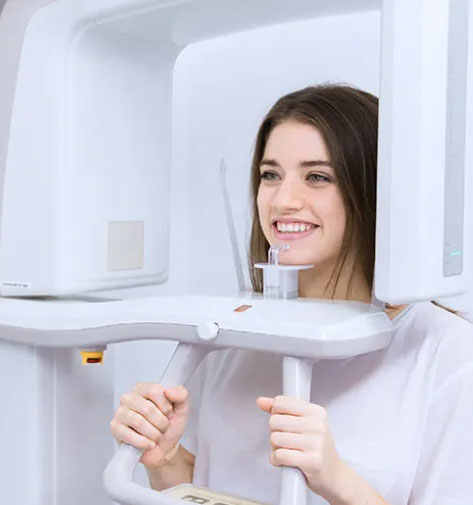
Cone Beam CT Scan, or CBCT, is a specialized type of computed tomography (CT) imaging that focuses on capturing images of the oral and maxillofacial region. It employs a cone-shaped X-ray beam and a detector to capture a series of images from different angles, creating a three-dimensional representation of the scanned area. CBCT provides comprehensive information about the bone structure, teeth, nerves, soft tissues, and airways, aiding in the diagnosis and treatment planning of various dental and oral conditions.
How Does the Cone Beam CT Scan (3D Scan) Work?
CBCT scans are highly advantageous for a wide range of dental applications, including implant planning, orthodontics, endodontics, periodontics, oral and maxillofacial surgery, and evaluation of pathology or trauma. The detailed 3D images provided by CBCT assist in precise treatment decisions, improving patient care and outcomes while minimizing potential risks.
Benefits of Cone Beam CT Scan (3D Scan)?
- Accurate and Comprehensive Imaging: Cone Beam CT Scan provides highly detailed and three-dimensional images of the teeth, jaws, and facial structures. This level of precision enables dental professionals to analyze anatomical structures, identify dental conditions, and plan treatments with accuracy.
- Minimal Radiation Exposure: Compared to traditional medical CT scans, Cone Beam CT Scan involves a lower radiation dose, making it a safer option for patients. The technology focuses the X-ray beam only on the area of interest, reducing unnecessary radiation exposure to other parts of the body.
- Quick and Convenient Scanning Process: Cone Beam CT Scans are typically faster and more comfortable for patients compared to traditional CT scans. The scanning process is efficient and captures images in a single rotation, minimizing the time required for image acquisition.
- The three-dimensional images provided by Cone Beam CT Scan allow for precise treatment planning in various dental procedures. It aids in determining optimal implant placement, identifying the size and position of pathology or abnormalities, and evaluating the relationship between teeth, bones, and other structures.
- Improved Patient Communication: The detailed 3D images generated by Cone Beam CT Scan help dental professionals explain diagnoses and treatment plans to patients more effectively. Visualizing the dental condition and treatment outcomes enhances patient understanding, leading to informed decision-making.
- Compatibility with Digital Dentistry: Cone Beam CT Scans integrate seamlessly with digital dentistry workflows. The three-dimensional images can be easily shared and utilized in conjunction with other digital tools such as intraoral scanners, CAD/CAM systems, and virtual treatment planning software.
Oral cancer screening
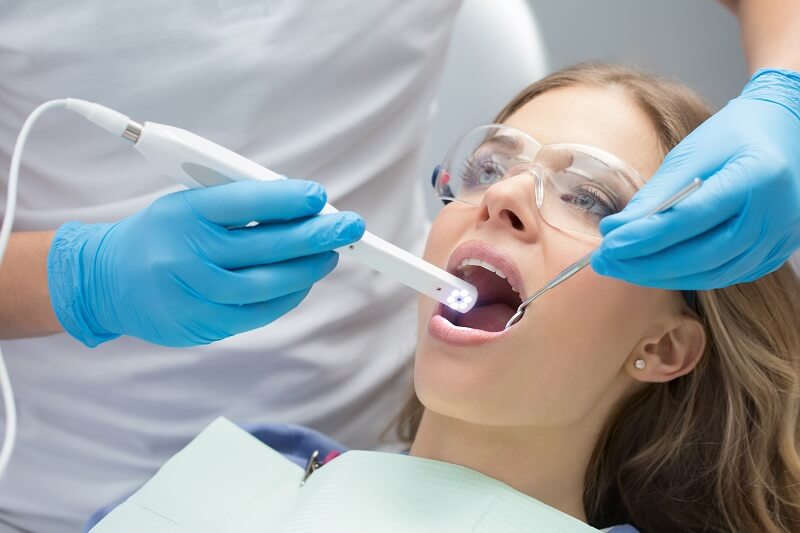
Oral cancer screening is an examination performed by a dentist or doctor to look for signs of cancer or precancerous conditions in your mouth.
The goal of oral cancer screening is to identify mouth cancer early, when there is a greater chance for a cure.
Most dentists perform an examination of your mouth during a routine dental visit to screen for oral cancer. Some dentists may use additional tests to aid in identifying areas of abnormal cells in your mouth.
Medical organizations disagree on whether healthy people without risk factors for mouth cancer need oral cancer screening. No single oral exam or oral cancer screening test is proved to reduce the risk of dying of oral cancer. Still, you and your dentist may decide that an oral exam or a special test is right for you based on your risk factors.
Fluoride treatment
Fluoride is a naturally occurring mineral that has been utilized for many years to help prevent tooth decay. Tooth decay begins when the bacteria and sugars present in the mouth form acids that erode the tooth’s protective enamel. These acids cause minerals to be lost from the tooth’s enamel layer, a process called demineralization. Left unchecked, this can lead to the formation of holes (cavities) in the teeth.
Fluoride helps strengthen the teeth through a process called remineralization, wherein the mineral bonds to weakened areas of tooth enamel. It also disrupts acid production, helping to inhibit the process that leads to tooth decay.
Fluoride can benefit people of all ages. Children who get adequate fluoride while their teeth are still forming will develop permanent teeth that are stronger and more decay-resistant over a lifetime. Adults who are particularly susceptible to tooth decay also benefit from fluoride application.
What Are Dental Sealants?
Dental sealants are thin, protective coatings applied to the chewing surfaces of the molars and premolars. These surfaces often have deep grooves and pits where bacteria and food particles can accumulate, making them more susceptible to decay. Sealants act as a barrier to help prevent bacteria and acids from reaching the tooth enamel and causing cavities.
Periodontal Maintenance in Schaumburg, IL
At O’Reilly Dental, we are proud to offer Periodontal maintenance to our dental patients in Schaumburg, IL. Periodontal maintenance is an essential part of preventive dentistry, and it helps keep your teeth and gums healthy and keeps your mouth free of disease and infection. Our skilled and experienced dental team performs periodontal maintenance. In addition, it is an affordable service that is covered by most dental insurance plans.
Call our dental office to make an appointment today and learn more about our dental services.
Gum Disease Prevention: Keep Your Gums Healthy for Life
Healthy gums are the foundation of a healthy smile. At O’Reilly Dental, we focus on gentle, effective gum disease prevention to protect your teeth, gums, and overall wellness. With professional care and simple daily habits, most gum disease can be avoided, reversed, or kept under control long-term.
Why Gum Health Matters
Night guards for grinding (bruxism)
Identification
If you grind or clench your teeth in the night, you may wake up with painful teeth, jaws or a headache. If there is no pain to alert you, your spouse may tell you that you grind because the noise keeps her awake, or we may notice signs or teeth wear during a dental exam. There is no definite known cause of teeth grinding or bruxism. Various theories link it to misalignment of the jaw, genetics, allergies or intake of caffeine, tobacco or amphetamines. Tooth grinding often occurs in children and sometimes goes away by the time children reach the age of 10, and other times it becomes worse. The alignment of the permanent teeth may dictate whether one will have bruxism or not. Those with misalignment of the upper jaw to their lower saw seem to be more likely to have bruxism. This occurs most of the time at night because it is a subconscious neuromuscular disorder as the teeth are constantly trying to find its proper rest place. Sometimes stress or anxiety causes bruxism to become worse. Braces often prevent tooth grinding later in life because the teeth have been moved to its proper, comfortable resting place.
Significance
A night guard or occlusal guard must be worn to prevent much of the pressure on the teeth during bruxism. It is a horse-shoe shaped mouthpiece that is worn at night or during the day when the teeth grinding or clenching is at its worst. Over-the-counter ones are not recommended as they can alter your bite and can lead to a worse bruxism habit. A custom one made at a dental office is the best one and will last longer. We will take a mold of your teeth and make a custom-made appliance that will fit your teeth perfectly and align your jaw properly. Most patients who complained of migraine headaches or jaw pain see complete or significant improvement after a night guard is worn. Also, a night guard will protect your teeth and prevent significant wear of the enamel of your teeth.

Sports mouthguards
Sports mouthguards, also called sportsguards, are an absolutely essential piece of sports safety equipment. Unfortunately, despite the fact that thousands lose or injure teeth every year while participating in sports, sportsguards are often overlooked or underutilized by athletes.
Boy with sports mouthguardWe are strong advocates of preventive dental care, which is why we create custom sportsguards for athletes of all ages. Many patients or their parents think that mouthguards are only for contact sports where athletes may be hitting or running into each other, such as hockey & football. However, there are dozens of sports for which we recommend sportsguards, some of which are considered “solo” or non-contact sports. For example, we recommend sportsguards for volleyball, soccer, gymnastics, mountain biking & rollerblading.
Oral Hygiene Instructions
Generally, when people think of oral health, they think about brushing their teeth for a beautiful, pearly white smile.
Complete oral care is about more than just white teeth and fresh breath. It also includes flossing, visiting your dentist regularly, and much more. In fact, a good oral health routine not only preserves your smile, but it also improves your overall health.
Scientific research has shown many links between poor oral hygiene and medical conditions. For instance, poor oral hygiene can lead to the following complications:
- Mouth infections that can pose a serious risk to other major organs
- Increased risk of developing heart disease
- Digestive disorders, including irritable bowel syndrome and intestinal failure
- Women may have a greater risk of having preterm and/or low birth weight babies.
Teeth are our gateway to great nutrition. Being able to chew a wide variety of quality food is essential to the health and wellbeing of your entire body. Failure to maintain good oral hygiene can cause pain, infection, cavities and even tooth loss. Tooth loss is one of the leading causes of vitamin and mineral deficiency because it severely impacts your ability to eat nutritious food.