

Implant Dentistry
Single Tooth Implants
Single tooth implants in Schaumburg, IL are the ideal solution for replacing missing teeth. We use cutting-edge dental implants to replace the root of your missing tooth, providing a sturdy foundation for your tooth. Get a second chance with the perfect smile at O’Reilly Dental.
The Most Natural Solution for Missing Teeth
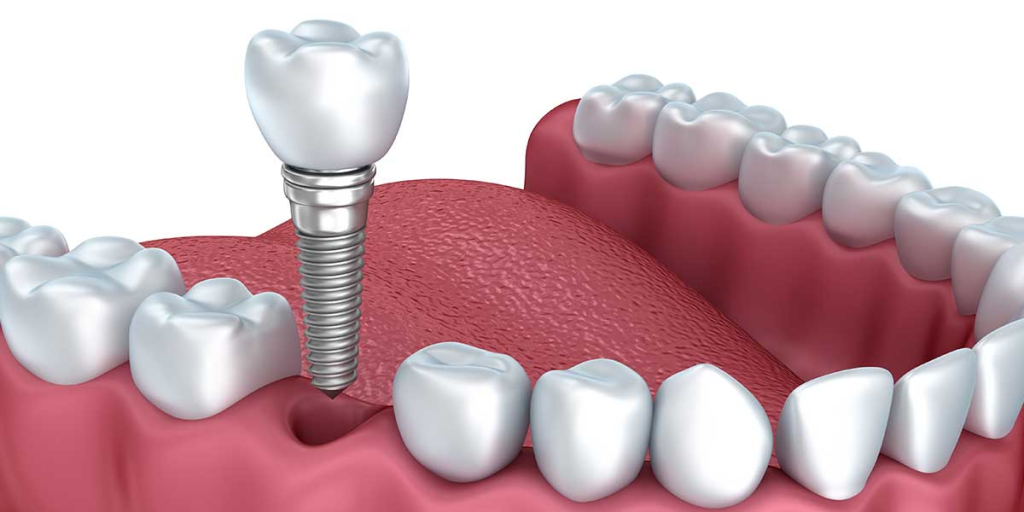
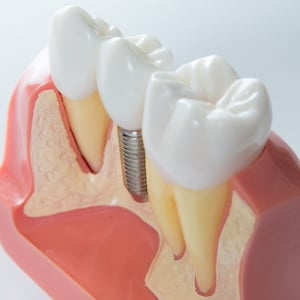
Single tooth implants are innovative dental prosthetics designed to replace individual missing teeth. They consist of a titanium or ceramic post, abutment, and custom-made crown and mimic the structure and function of natural teeth. Surgically implanted into the jawbone, the titanium post integrates with the bone over time through a process called osseointegration, ensuring optimal stability. Single tooth implants restore oral functionality, prevent bone loss, and seamlessly blend with adjacent teeth, so they look and feel like natural teeth.
How Do Single Tooth Implants Work?
Single tooth implants mimic the natural structure and function of a tooth root. Made from biocompatible titanium or ceramic, the implant post is surgically placed into the jawbone where the missing tooth once resided. Over time, osseointegration occurs, during which the bone tissue integrates and fuses with the surface of the titanium implant.
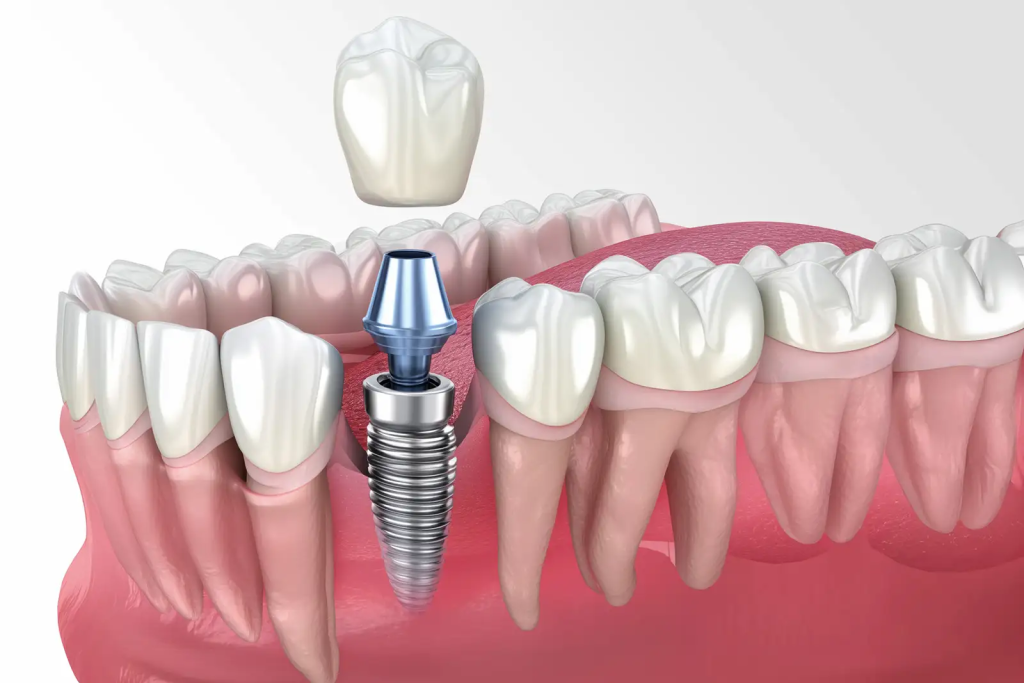
Once osseointegration is complete, an abutment is attached to the implant post, which serves as a connector between the implant and the custom-made crown. The crown, typically made from ceramic or porcelain, is crafted to match the color, shape, and size of the surrounding teeth, ensuring a natural appearance. Once securely attached to the abutment, the crown functions just like a natural tooth, enabling normal chewing, biting, and speech.
What are Implant Crowns?
Implant crowns refer to prosthetics that cover the exposed portion of a structurally intact tooth. They are affixed onto the abutment, which is situated at the outermost part of the dental implant, resembling natural teeth.
Implant crowns allow individuals to regain their ability to eat, smile, and interact socially without discomfort or self-consciousness, allowing them to embrace life to its fullest extent. As an optimal remedy for missing or impaired teeth, these crowns excel in functionality and aesthetics.
What is an Implant Bridge?
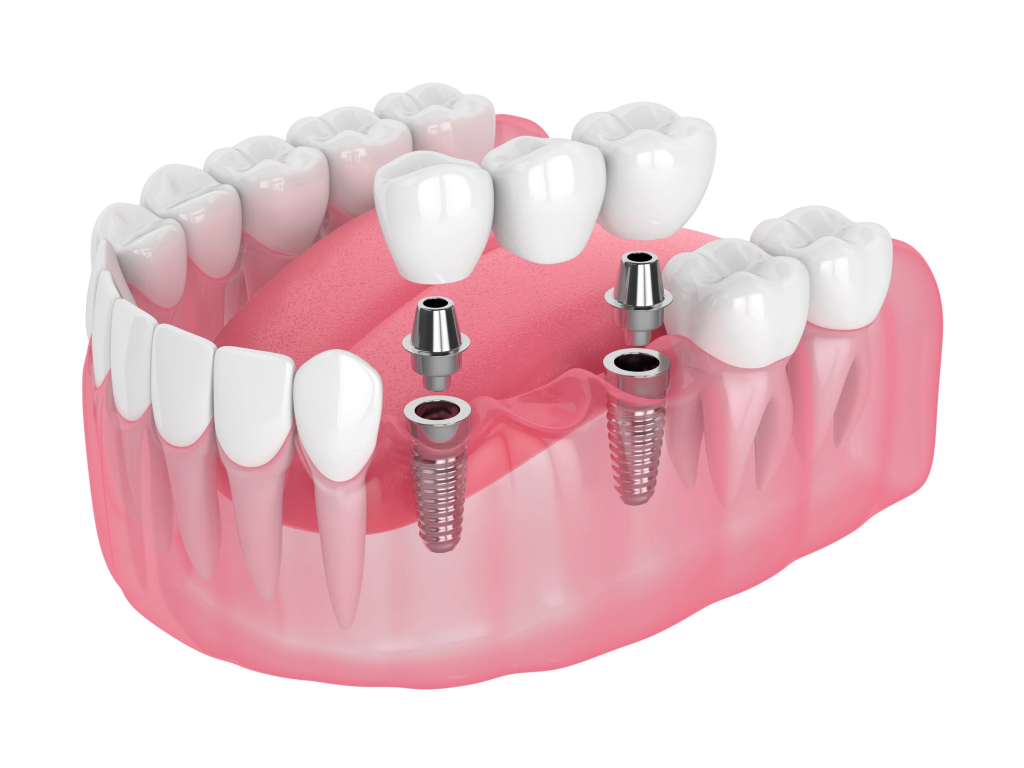
An Implant Bridge is an innovative dental restoration that seamlessly replaces one or more missing teeth. It is a bridge that is supported by dental implants, providing unparalleled stability and functionality compared to traditional bridges or dentures. The Implant Bridge not only restores your smile but also enhances your overall oral health.
Why Choose an Implant Bridge?
Natural Appearance: Implant Bridges are designed to mimic the look and feel of your natural teeth. They blend seamlessly with your existing teeth, giving you a beautiful, undetectable smile.
Durability: Unlike traditional dentures or bridges, Implant Bridges are a long-term solution. They are anchored securely to dental implants, ensuring they won’t slip or shift when eating or speaking.
Preserves Jawbone Health: Dental implants, which serve as the foundation for the Implant Bridge, stimulate the jawbone, preventing bone loss. This not only maintains the structural integrity of your face but also promotes overall oral health.
Improved Functionality: With an Implant Bridge, you can enjoy your favorite foods without restrictions. These bridges provide the strength and stability required for comfortable chewing.
Enhanced Confidence: Missing teeth can impact your self-esteem. An Implant Bridge restores your smile and gives you the confidence to engage in social and professional interactions without hesitation.
Implant-supported dentures in Schaumburg
Implant crowns refer to prosthetics that cover the exposed portion of a structurally intact tooth. They are affixed onto the abutment, which is situated at the outermost part of the dental implant, resembling natural teeth.
Implant crowns allow individuals to regain their ability to eat, smile, and interact socially without discomfort or self-consciousness, allowing them to embrace life to its fullest extent. As an optimal remedy for missing or impaired teeth, these crowns excel in functionality and aesthetics.
What Is the Basic Definition of an Implant-supported Denture?
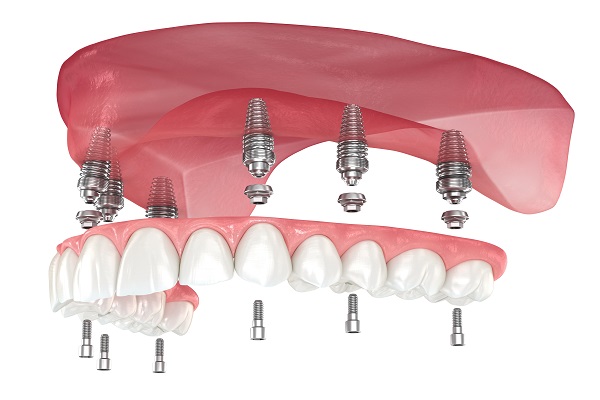
Understanding what an implant-supported denture is can help you determine if this type of oral appliance is a good fit for your lifestyle. The name offers a clear hint. Basically, it is an overdenture that features faux teeth made from porcelain or acrylic and acrylic gums. This overdenture snaps into implants placed in the jawbone. This support functions almost like the roots of real teeth, so the denture fits securely and looks more natural.
Full mouth implants (All-on-4/ All-on-X)
All-On-4 Dental Implants
Adult tooth loss is something that can happen to anyone. It is not uncommon for adults over the age of 35 in America to have multiple missing teeth. Several factors can contribute to tooth loss, including:
- Injuries sustained in contact sports.
- Gum disease.
- Decaying teeth.
Regardless of the cause of your tooth loss, you should consider filling the gaps as soon as possible. Missing teeth can cause the remaining teeth to recede and can also lead to bone deterioration. Moreover, having gaps in your teeth can affect your smile and confidence.
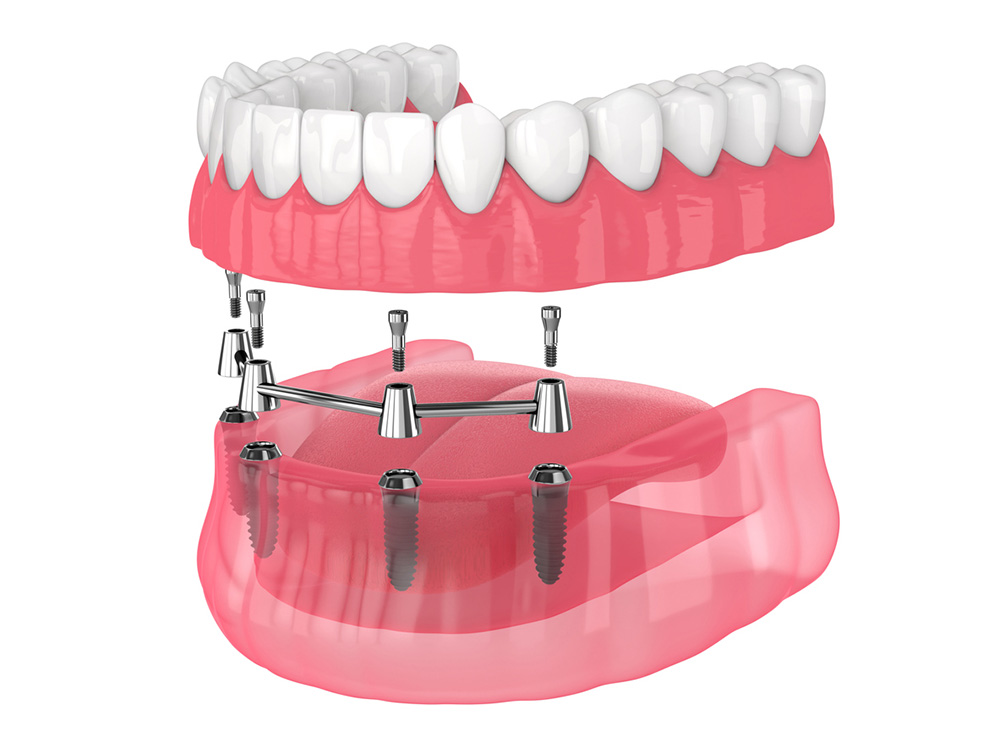
Dental implants have become the standard solution for replacing missing teeth. The number of implants required depends on the extent of tooth loss. If you have multiple missing teeth on one jaw, the all-on-4 implant may be the best option for you. This treatment involves strategically placing four implants to achieve complete tooth replacement.
All-On-X Dental Implants
All-on-X dental implants are revolutionizing the field of tooth replacement by offering a comprehensive solution for individuals who are edentulous, meaning they have lost all of their teeth. This novel treatment approach combines the advantages of dental implants with the practicality of a fixed prosthetic arch, allowing patients to enjoy enhanced oral function and a natural-looking smile.
The All-on-X approach utilizes four to six strategically placed implants per arch, in contrast to traditional dental implants that require a separate implant for each missing tooth. This precise placement of implants ensures maximum stability and support for the entire dental arch.
The All-on-X technique offers several advantages over conventional implant techniques. It reduces treatment times and costs by minimizing the number of implants needed.
What Is Bone Grafting?
The good news about dental implants is that most people who want to get them to replace missing natural teeth can do so. However, some patients have a weak foundation near the spot of the future implant that can require a procedure known as a bone graft before installing the dental implants. Numerous conditions can cause a lack of adequate bone strength in the mouth, including the following:
- The bone surrounding the dental implant area is too short or thin
- Existing gum disease
- Certain pre-existing medical conditions
- Dentures that do not fit properly in your mouth
- Having several teeth extracted in the past
- General bone density weakness
- Damage to your teeth and gums from acid erosion
- Having several cavities
- Cracks in the teeth
- Infection in the bones of your jaw
The purpose of a bone graft is to allow your mouth to regenerate new bone that will provide enough strength to support your new dental implants.
What to Expect if You Need a Bone Graft
The first thing your oral surgeon will do when completing a bone graft is to remove small portions of bone from another area of your mouth with a scalpel. You do not feel anything during this process because you would have already received anesthesia. After removing the bone fragments, the next step it to transfer it immediately to the location of your future dental implant. Whether you will require stiches depends on the amount of bone fragments your dentist needs to remove.
In the event that your oral surgeon must remove a large amount of bone, he or she may need to cut into the area of bone to get a better view of your gum tissue. Technically, oral surgeons refer to this process as reflecting a full thickness periosteal flap. Thanks to this procedure, patients who couldn’t get dental implants in the past due to inadequate bone strength can now qualify to receive them.
Sinus lift
A sinus lift, or sinus augmentation, is a surgical procedure that improves the placement of an implant tooth. Some people need dental implants but do not have enough bone support for an implant due to bone loss. A sinus lift can help because it increases the bone in your upper jaw by adding bone to the space between your molars and premolars. To make room for the bone, the sinus membrane will be raised or “raised”, which gives the surgery its name. A sinus lift is usually performed by a dental specialist such as a maxillofacial surgeon or periodontist.
When Do You Need a Sinus Lift?
If your dentist cannot place dental implants because you do not have enough bone density in your upper jaw or your sinuses are too close to your jaw, your dentist may recommend a sinus lift. Wondering why you might have bone loss? Good question. Some factors that cause osteoporosis include:
- Periodontal gum disease
- Losing teeth in your upper jaw
- Reabsorption of bone into the body after tooth loss
What is a ridge augmentation?
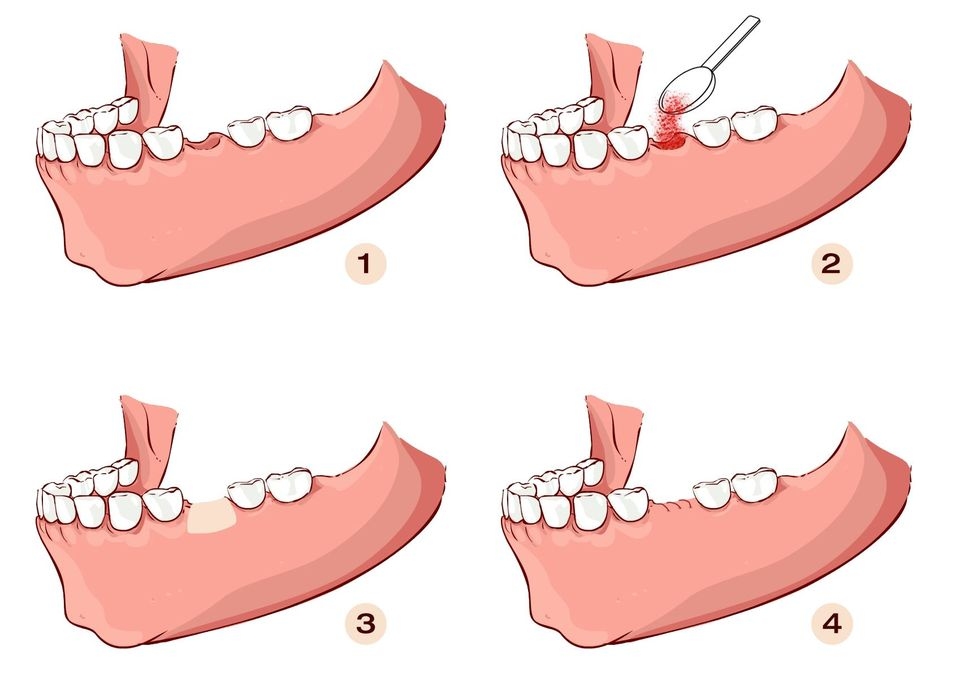
A ridge augmentation is a common oral surgery procedure when bone volume has been lost several years after a tooth extraction. This procedure helps recreate the natural contour of the gums and jaw to aid the placement of dental implants. Implants require a very specific amount of bone to allow the placement. Often ridge augmentation can be avoided with a socket preservation graft done at the time of extraction, and seeing your oral surgeon at the recommended time of 3-4 months after extraction for implant placement, as opposed to waiting several years.
The alveolar ridge of the jaw is the bone that surrounds the roots of teeth. Following an extraction, this ridge of bone decreases in volume without the function of holding a tooth root. The previous height and width of the socket will continue to deteriorate.
Rebuilding the original height and width of the alveolar ridge is not always medically necessary, but may be required for dental implant placement or for aesthetic purposes. Dental implants require bone to support their structure and a ridge augmentation can help rebuild this bone to accommodate the implant.
How is a ridge augmentation accomplished?
On milder cases, ridge augmentation is accomplished by placing bone graft material at the site with a collagen barrier. The gums are released and secured with sutures. This will take 3-4 months to heal before implant placement. You should avoid hard foods in this area for at least two months to allow healing. This procedure is called guided bone regeneration.
On more involved defects, ridge augmentation may require your oral surgeon to take a piece of bone from your jaw to shape and secure to the defect. Using your own bone allows increased vitality to the graft, and helps achieve a larger volume that may be needed for your implant reconstruction. IV sedation can be provided for comfort during this procedure. It is important to follow the instructions after surgery to allow the best healing. This procedure is called block graft reconstruction.
Our doctors will then consult you to plan the next step in the placement of dental implants to get your closer to chewing more naturally.
What is Guided Implant Surgery?
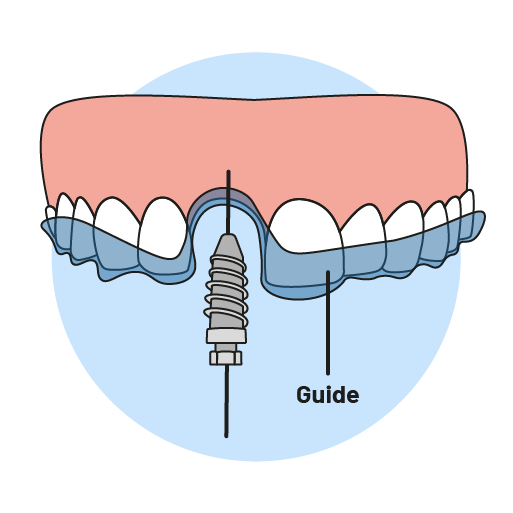
Guided implant surgery refers to a modern dental procedure used to place dental implants in the jawbone to replace missing teeth. This approach utilizes advanced dental technology such as CBCT (3D cone beam computed tomography) to plan and perform the surgery with high precision.
Why Should You Prefer A Guided Implant?
You should consider guided implant technology if you are suffering from multiple tooth loss or decay and want to have fresh white teeth through dental implants. The higher precision and shorter recovery time will make you more comfortable after the procedure. Also, if you have a sort of dental fear, this new technology might help you feel more confident before you sit on the dental engine.
What is an immediate dental implant?
Dental implants are the best replacement for natural teeth. Traditionally, when a tooth must be removed, a bone graft is placed in the tooth’s socket to fill the space. This bone graft requires a few months to heal before an implant can be placed. Once the implant is surgically placed, you’ll need another 2-3 months of healing before the implant can be restored with a crown (cap). This traditional protocol takes 4-6 months from the time of tooth removal to your very last visit where the crown is seated. During this period of time, you’ll still have an empty space (gap) where the implant was placed, because while it’s healing, there is no crown on it. To fill the gap while you’re healing, you can either leave the gap empty, or have a temporary, removable tooth placed. Alternatively, you may be a candidate for an IMMEDIATE implant.
An immediate implant can save months from your total treatment time by bypassing the step where a bone graft is placed in the socket after tooth removal. In this scenario, the tooth is removed, and a dental implant is placed directly in the socket, achieving stability by engaging the existing socket walls. Usually, some bone grafting is required around the implant to fill the small gaps. BUT, the benefit is that, after a period of 2-3 months, the implant is ready to be restored with a crown. This saves 2-3 months of total treatment time.
Not everyone is a candidate for an immediate implant. Your oral surgeon will evaluate your X-rays to determine if your tooth’s socket has sufficient bone to accommodate an immediate implant.